What to inspect before you buy
- Record the bibliographic details
Capture title page, copyright page, publisher, date, edition statement, ISBN if present and any special limitation numbers.
- Assess the whole object
Check for a dust jacket, foxing, loose hinges, missing illustrations, library markings, inscriptions and odors.
- Separate signed from merely inscribed
A signature should not be presented as authenticated without appropriate evidence. Photograph the page and compare provenance cautiously.
- Match edition and completeness
A first printing, later printing, paperback reissue and ex-library copy can behave very differently in resale markets.
Common deal-killers
These are not automatic reasons to walk away, but they should change your offer, cost allowance or confidence in the final sale.
- Missing dust jackets
- Ex-library markings
- Mold, water damage, odor
- Incorrect edition claims
How to research a sale price
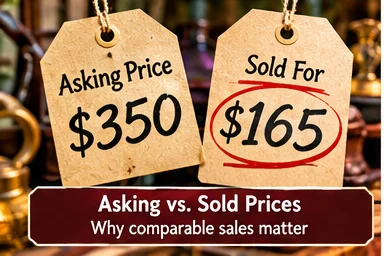
Write down exact identifying details and condition. Compare recent, closely matching completed transactions where accessible, noting whether accessories and shipping are included. Active listings show asking prices, not realized proceeds. Enter a conservative estimate in the calculator; don't treat a single exceptional sale as the normal outcome.
Browse current marketplace listings
These are active searches for discovery, not verified sold-price data. Check seller descriptions, photos and return terms independently.
Search rare books on eBay ↗Marketplace search is currently a plain external link. Affiliate tracking is not configured.
When to bring it home
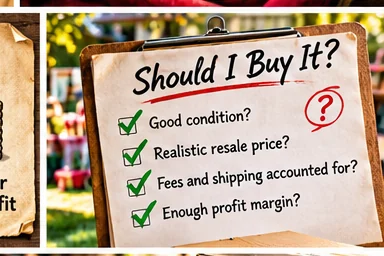
Buy when the identification is strong, the condition has been checked, the price has room for repairs and selling costs, and comparable demand is credible. Pass or reduce your offer when multiple unknowns could erase the margin. A great object can still be a bad financial flip.